Improved Motor Imagery EEG Interdevice Decoding by Reweighting Multisource Domain Samples (2024)
Open in webOpen in zoteroOpen pdf
1 Abstract
Electroencephalogram (EEG)-based motor imagery brain–computer interface (MI BCI) has exciting prospects in applications. Multi-source domain problem of MI EEG decoding needs to be solved urgently. That is, how to use existing vast amounts of MI EEG data (multisource domain) to train interdevice algorithms for new equipment (target domain) decoding. In this work, we propose a compact sample re-weighting EEG decoding network (SRENet) method and a sample re-weighting training strategy to solve this issue. The target domain is expressed as a weighted combination of multisource domains to improve the decoding performance of interdevice MI. A novel sample re-weighting classifier and a conditional re-weighting discriminator are used for re-weighting multisource domain samples in training process. We evaluated the performance of SRENet on three public datasets. The results outperformed baseline method by 6.88%, 5.90%, and 3.49% on the three tasks, respectively. Experimental results verified the effectiveness of the proposed method for multisource domain problems. The interdevice MI performance has been significantly improved. This study provides a new solution for multisource domain problem in MI EEG decoding, which will make better use of existing EEG datasets and help people use BCI more easily.
2 NOTES
In this paper, the authors propose a model similar to that of @fuSCDANLearningCommon2023, since both are from the same authors. The architecture, as shown in Figure 1, has a simple feature extractor which makes use of the 1-D Convolution shown in Figure 2. Essentially, this is a temporal-spatial convolution, since it has a width to accommodate the temporal space and a depth to all the channels, which is the spatial space. The most important aspect of the architecture is the Sample Reweighting Classifier (SRC), colored green in the Figure 1, which (on the right side) does a traditional class classification and on the left has the Sample Distance Measurer (SDM), this is so to increase the training weight of those data samples that are closer to the target domain (low between-domain distance) in the source domain feature spaces. SRC attenuates the effect of source data samples that differ significantly from the target domain in the feature space. The distance between every feature of the source domain sample and the target center defined as , with , is measured by the SDM, where denotes the Euclidean distance. And, at last, is the orange colored blocks, which is the Conditional Reweighting Discriminator, also present in @fuSCDANLearningCommon2023, to align the features of different domains and designed with a loss function to give the easy-to-transfer samples a higher weight in the training procedure. Their experiments are on three datasets, but focus mainly on adapting the GigaDB to datasets 2a and 2b. Overall, I like it, found it easier to understand then the other paper, but also doesn’t have code available.
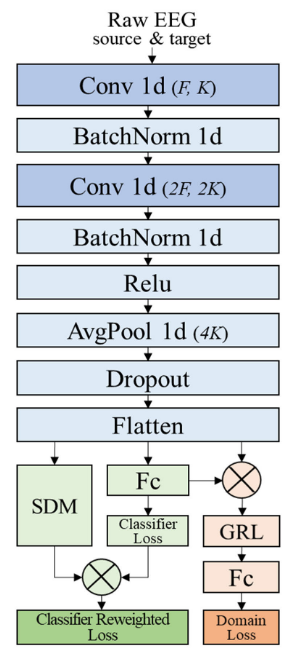
Figure 1. Architecture of the proposed SRENet.
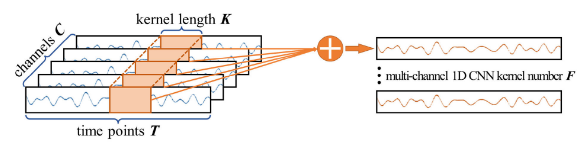
Figure 2. 1-D multichannel convolutional layer of SRENet.
Quotes:
Dataset preparation
In the experiments of this work, the time interval of [0, 3] s in each trial is considered for Giga and [1, 4] s for the 2a and 2b datasets, respectively. We adopted the common 22-channel EEG signals in the Giga to 2a experiment and the common three-channel EEG signals in the Giga to 2b and 2a–2b experiments. To make the results comparable, only the data samples of the left- and right-hand imagery were employed. Additionally, a causal third-order Butterworth filter with frequency band (4–38 Hz) is employed to preprocess the data samples.
Evaluation
For the Giga dataset, the data of the nine subjects were selected, and for the 2a and 2b datasets, the data of all nine subjects were selected. To simulate real-world applications, we conducted three experiments: Giga to 2a, Giga to 2b, and 2a–2b, which were interdevice tasks from a larger number of channels to a smaller number of channels. In all three tasks, common channels between the two selected datasets were adopted. In each task, we trained the decoding methods on one dataset and adapted them to the data of each subject in another dataset.